Booking management is the foundation of every successful banquet hall business. Whether you host weddings, corporate events, birthday celebrations, receptions, or social gatherings, every event begins with a well-managed booking process. A single mistake—such as a missed inquiry, double booking, or incorrect payment record—can lead to unhappy customers, financial losses, and damage to your reputation.
As customer expectations continue to rise, manual booking methods like paper registers and spreadsheets are becoming less effective. Modern venue owners need a faster, more organized way to manage inquiries, bookings, payments, and customer communication. Read more here about – 7 Hidden Revenue Leaks in Banquet Hall Businesses (And How to Fix Them).
This is where banquet hall booking management software makes a difference. By digitizing the entire booking process, venue owners can improve efficiency, reduce errors, and provide a seamless experience for customers.
What Is Banquet Hall Booking Management?
Banquet hall booking management is the process of handling every stage of an event reservation, from the first customer inquiry to the successful completion of the event.
It includes:
Managing customer inquiries
Checking venue availability
Confirming bookings
Scheduling events
Tracking payments
Coordinating staff
Managing customer communication
Generating invoices
Maintaining event records
A structured booking process ensures smooth operations and improves customer satisfaction.
Why Efficient Booking Management Matters
A well-organized booking system offers several business benefits.
It helps you:
Prevent scheduling conflicts
Respond to inquiries faster
Improve customer satisfaction
Increase booking conversion rates
Reduce manual work
Maintain accurate business records
Improve overall operational efficiency
When every booking is managed professionally, your venue earns customer trust and builds a stronger reputation.
Step 1: Capture Every Customer Inquiry
Every booking begins with an inquiry. Customers may contact your venue through:
Website contact forms
Phone calls
WhatsApp
Email
Social media
Walk-in visits
It’s important to record every inquiry immediately.
Collect information such as:
Customer name
Contact details
Event type
Preferred event date
Guest count
Budget
Special requirements
Using a centralized CRM ensures every inquiry is stored securely and can be tracked easily.
Step 2: Check Venue Availability
Before confirming any booking, verify venue availability.
A digital booking calendar provides real-time visibility into:
Available dates
Confirmed bookings
Tentative reservations
Maintenance schedules
Blocked dates
Real-time scheduling helps eliminate double bookings and reduces confusion among staff members.
Step 3: Share Accurate Quotations
Customers appreciate clear and transparent pricing.
Your quotation should include:
Venue rental charges
Catering costs
Decoration packages
Equipment charges
Taxes
Additional services
Payment terms
Providing detailed quotations builds trust and minimizes future misunderstandings.
Step 4: Confirm the Booking
Once the customer accepts the quotation, finalize the booking by recording all necessary details.
Include:
Event date
Event timing
Guest count
Hall selection
Customer information
Special instructions
Advance payment received
A digital booking system keeps this information organized and easily accessible.
Step 5: Track Payments Efficiently
Managing payments manually can result in delayed collections or accounting errors.
A smart booking management system helps you:
Record advance payments
Monitor pending balances
Generate GST-compliant invoices
Send payment reminders
Track complete payment history
Accurate payment tracking improves cash flow and simplifies financial management.
Step 6: Coordinate Event Preparation
Once the booking is confirmed, multiple departments need to work together.
Coordinate:
Decoration teams
Caterers
Housekeeping
Security staff
Technical support
Event coordinators
Sharing booking details through one centralized platform ensures everyone has access to the latest information.
Step 7: Stay Connected with Customers
Communication doesn’t stop after booking confirmation.
Keep customers informed by sending:
Booking confirmations
Payment reminders
Event schedules
Venue instructions
Final confirmations
Consistent communication improves customer confidence and creates a professional experience.
Step 8: Review the Event After Completion
After the event, review its overall success.
Track:
Customer feedback
Outstanding payments
Additional service requests
Future booking opportunities
Following up after the event also helps build long-term relationships and encourages repeat business.
Common Booking Challenges Faced by Venue Owners
Many banquet halls experience similar operational issues, including:
Missed Customer Inquiries
Without a centralized system, valuable leads may be forgotten.
Double Bookings
Manual scheduling often causes conflicts during busy seasons.
Delayed Follow-Ups
Customers may choose another venue if they don’t receive timely responses.
Payment Tracking Problems
Manual records increase the risk of missing outstanding balances.
Scattered Customer Information
Managing information across multiple platforms wastes time and creates confusion.
Modern banquet management software addresses these challenges by centralizing every aspect of the booking process.
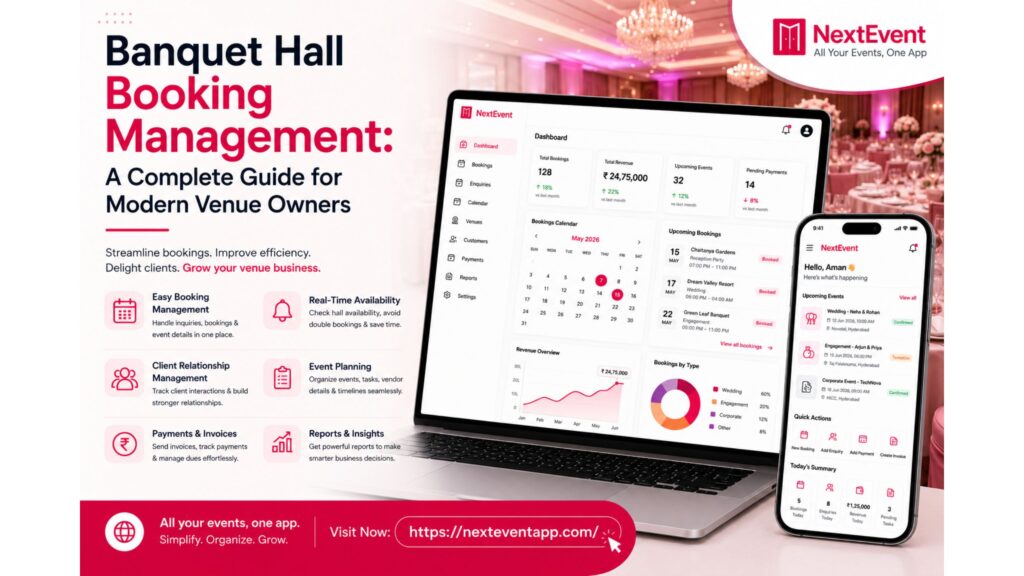
How Banquet Hall Management Software Simplifies Booking Management
Digital software helps venue owners streamline operations by offering features such as:
Real-time booking calendar
Customer Relationship Management (CRM)
Automated follow-up reminders
Invoice generation
Payment tracking
Staff coordination
Business reporting
Cloud-based access
Multi-venue management
Instead of switching between spreadsheets, registers, and messaging apps, everything is managed from one dashboard.
Best Practices for Effective Booking Management
To improve booking efficiency:
Respond to inquiries quickly.
Keep your booking calendar updated.
Confirm every reservation in writing.
Track payments digitally.
Automate follow-ups.
Store customer records securely.
Review reports regularly.
Use cloud-based software for better accessibility.
Following these practices reduces operational errors and improves customer satisfaction.
Conclusion
Effective booking management is essential for running a successful banquet hall. Every inquiry, payment, customer interaction, and event schedule contributes to the overall customer experience and business performance.
By replacing manual processes with smart banquet hall management software, venue owners can prevent booking conflicts, improve communication, streamline payments, and make informed business decisions.
As competition continues to grow, investing in an organized and automated booking management system is one of the smartest ways to improve efficiency, increase bookings, and build a profitable banquet hall business.
Frequently Asked Questions
1. What is banquet hall booking management?
Banquet hall booking management is the process of managing customer inquiries, reservations, event schedules, payments, communication, and event coordination from booking to completion.
2. Why is booking management important for banquet halls?
Effective booking management prevents scheduling conflicts, improves customer satisfaction, increases operational efficiency, and helps maximize venue revenue.
3. How does banquet management software improve bookings?
It automates scheduling, tracks inquiries, manages customer information, records payments, generates invoices, and provides real-time booking updates.
4. Can small banquet halls benefit from booking management software?
Yes. Small venues can reduce manual work, improve organization, prevent errors, and provide better customer service by using booking management software.
5. What features should banquet booking software include?
The software should include a booking calendar, CRM, payment tracking, invoicing, automated reminders, reporting, cloud access, and multi-venue management capabilities.