Managing a wedding venue is much more than booking dates and welcoming guests. Every successful wedding is the result of careful planning, seamless communication, and efficient coordination between multiple teams. From handling customer inquiries and vendor schedules to managing payments and ensuring everything runs on time, venue managers have a long list of responsibilities.
As the Indian wedding industry continues to grow, customer expectations are also increasing. Couples now look for venues that offer not only beautiful spaces but also professional service, quick communication, and a hassle-free booking experience. To meet these expectations, venue owners need modern systems that simplify daily operations and improve overall efficiency.
This guide explains the best practices for wedding venue management and how technology can help streamline operations while enhancing the customer experience.
Why Efficient Wedding Venue Management Matters
Every wedding is unique, but one thing remains constant: clients expect perfection. A delayed response, a scheduling conflict, or a missed payment reminder can negatively impact both the event and your business reputation. Read more here about – Why Every Event Venue Needs an Online Booking System.
Efficient venue management helps you:
Deliver a seamless booking experience.
Avoid scheduling conflicts.
Improve staff coordination.
Manage vendors more effectively.
Build long-term customer trust.
Increase repeat business and referrals.
A well-organized venue not only creates memorable events but also supports sustainable business growth.
Create a Centralized Booking System
One of the most common challenges for wedding venues is managing multiple inquiries from different sources. Calls, emails, website forms, and social media messages can quickly become difficult to track.
A centralized booking system keeps everything in one place, allowing your team to:
Check venue availability instantly.
Record customer information.
Schedule venue visits.
Confirm bookings.
Monitor booking status in real time.
This reduces confusion and ensures no inquiry is overlooked.
Improve Customer Communication
Clear and timely communication plays a major role in customer satisfaction. Couples often have questions about packages, decorations, catering, parking, guest capacity, and payment schedules.
Best practices include:
Responding to inquiries within a few hours.
Sending automated booking confirmations.
Providing clear payment schedules.
Sharing event timelines in advance.
Following up after venue visits.
Consistent communication builds confidence and increases booking conversions.
Organize Vendor Coordination
Every wedding involves multiple vendors working together, including:
Caterers
Decorators
Photographers
DJs
Florists
Makeup artists
Event planners
Keeping vendor schedules organized ensures everyone arrives on time and understands their responsibilities. A shared event calendar can help prevent misunderstandings and improve collaboration.
Track Payments Efficiently
Payment management is often one of the most time-consuming aspects of venue operations. Manual tracking increases the risk of missed installments or inaccurate financial records.
Digital systems help by:
Recording advance payments.
Tracking outstanding balances.
Generating invoices.
Sending payment reminders.
Maintaining complete transaction history.
Accurate payment tracking improves cash flow and reduces administrative work.
Train Your Staff
Technology alone cannot guarantee success. Your staff should understand booking procedures, customer service standards, and event coordination processes.
Regular training helps employees:
Use venue management software effectively.
Handle customer inquiries professionally.
Resolve problems quickly.
Maintain consistent service quality.
Well-trained staff contribute directly to smoother event execution.
Use Reports to Improve Performance
Data is valuable for every venue business. Regularly reviewing reports helps identify strengths and areas for improvement.
Monitor metrics such as:
Monthly bookings.
Revenue trends.
Popular event seasons.
Customer feedback.
Booking conversion rates.
Cancellation rates.
These insights support better planning and informed business decisions.
Adopt Venue Management Software
As your business grows, managing operations manually becomes increasingly difficult. Modern venue management software centralizes bookings, customer records, event schedules, and payments into one platform.
Key benefits include:
Real-time booking updates.
Customer Relationship Management (CRM).
Secure cloud storage.
Automated reminders.
Event scheduling.
Financial reporting.
Team collaboration.
Automation reduces manual work while improving operational efficiency.
How NextEvent Supports Wedding Venue Management
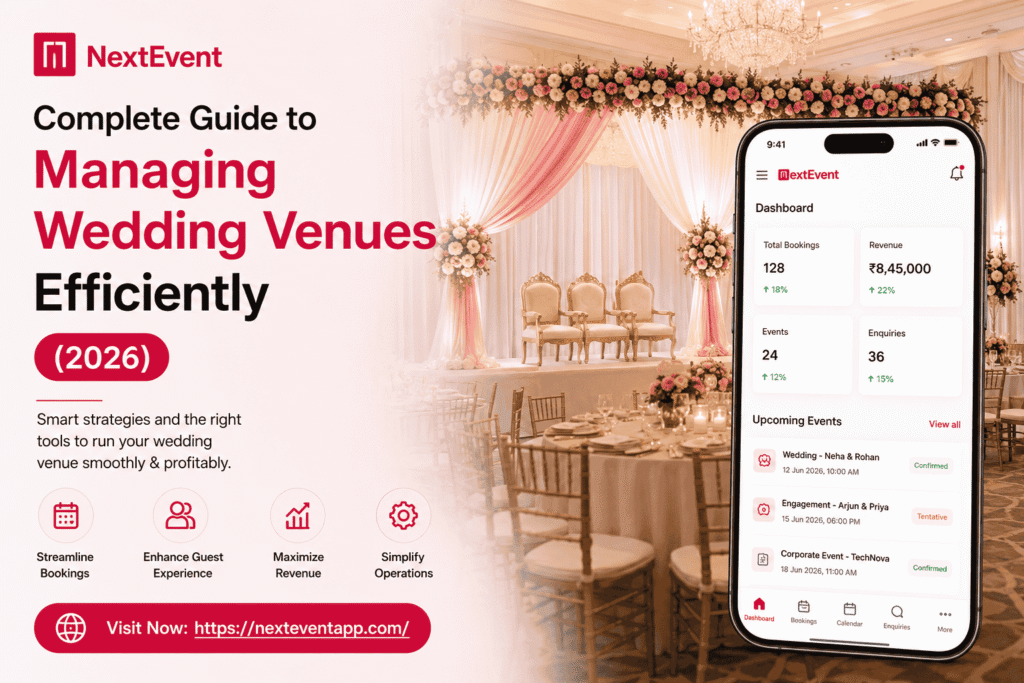
NextEvent is designed specifically for banquet halls, wedding venues, resorts, and event businesses. It provides a centralized platform that helps venue owners manage bookings, customer information, schedules, payments, and day-to-day operations from one dashboard.
By replacing spreadsheets and paper records with an organized digital system, NextEvent helps businesses reduce errors, improve communication, and provide a better experience for every customer.
Whether you’re managing one wedding venue or multiple event spaces, NextEvent makes operations more efficient and scalable.
Best Practices for Long-Term Success
To build a successful wedding venue business:
Keep your booking calendar updated.
Respond to inquiries quickly.
Maintain accurate customer records.
Collect customer feedback after every event.
Regularly update your pricing and packages.
Invest in staff training.
Use technology to automate repetitive tasks.
Monitor business performance through reports.
Continuous improvement helps your venue stay competitive in a rapidly evolving industry.
Final Thoughts
Efficient wedding venue management requires a combination of excellent customer service, organized operations, and the right technology. Businesses that rely solely on manual processes often struggle to keep up with increasing customer expectations and operational demands.
By adopting a digital platform like NextEvent, venue owners can simplify bookings, improve communication, streamline payments, and manage events with greater confidence. Investing in modern venue management software not only saves time but also creates a better experience for clients, leading to stronger business growth and long-term success.
Frequently Asked Questions
1. What is wedding venue management?
Wedding venue management involves overseeing bookings, customer communication, payments, vendor coordination, staff scheduling, and event execution.
2. Why is venue management software important?
It helps automate bookings, reduce errors, improve organization, and enhance customer service.
3. How can wedding venues improve customer satisfaction?
By responding quickly, maintaining clear communication, offering transparent pricing, and ensuring smooth event coordination.
4. Can small wedding venues benefit from venue management software?
Yes. Cloud-based software is suitable for venues of all sizes and improves efficiency without requiring significant technical expertise.
5. Why should wedding venue owners choose NextEvent?
NextEvent offers an all-in-one platform for managing bookings, customers, payments, schedules, and venue operations, helping businesses operate more efficiently while delivering exceptional event experiences.